






Xcel Pharma RIP 2.5 | Human Growth Hormone Fragment 177-191
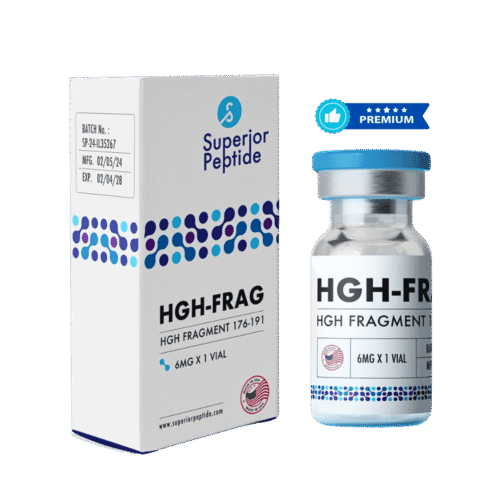
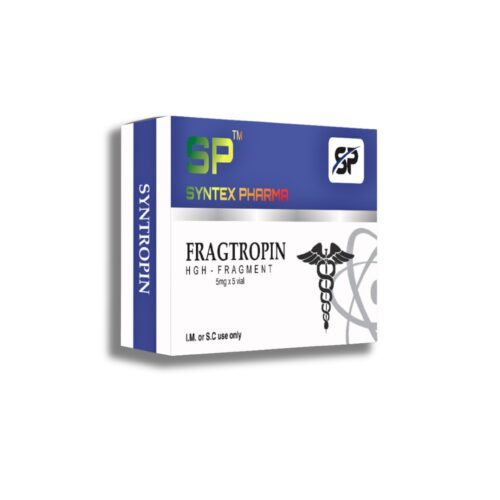
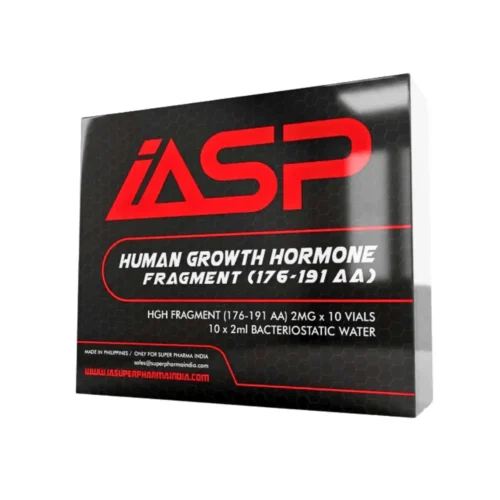
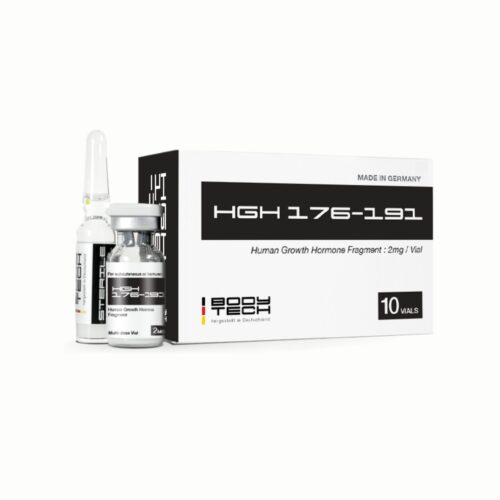
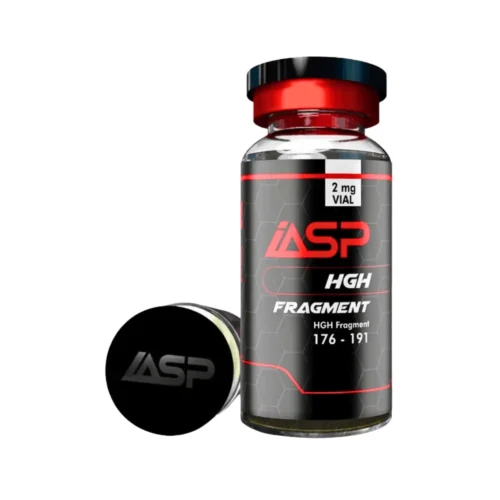
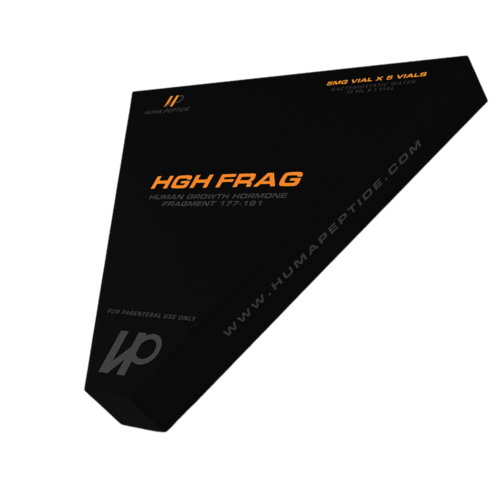
Xcel Pharma RIP 2.5 is a peptide product identified as Human Growth Hormone Fragment 177-191, a short peptide fragment derived from the C-terminal region of human growth hormone (HGH). It is primarily discussed in scientific and research contexts because of its distinctive peptide sequence and its relationship to the broader study of growth-hormone-derived fragments.
Unlike complete recombinant human growth hormone, HGH Fragment 177-191 represents only a specific portion of the growth hormone molecule. This makes it particularly interesting for researchers investigating how individual peptide sequences may behave independently from the complete parent hormone.
What Is HGH Fragment 177-191?
Human Growth Hormone Fragment 177-191 is a peptide sequence corresponding to amino acids 177 through 191 of human growth hormone. It has been investigated as a distinct fragment rather than as a replacement for full-length HGH.
Growth hormone is a naturally occurring peptide hormone composed of 191 amino acids. Researchers have studied different sections of the hormone to better understand whether individual fragments possess biological characteristics that differ from the complete molecule.
Fragment 177-191 is therefore of interest as a research peptide because it allows researchers to examine a specific region of HGH separately.
Xcel Pharma RIP 2.5
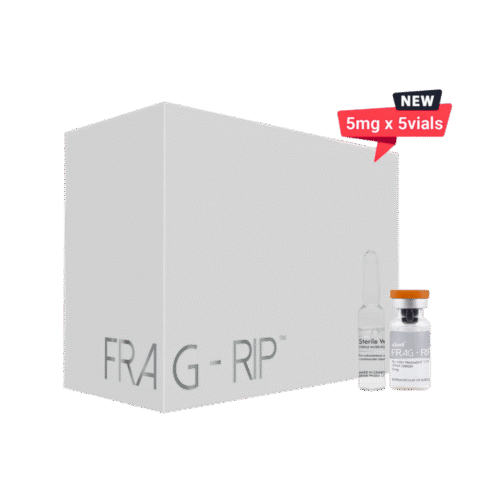
Xcel Pharma RIP 2.5 is presented as a peptide formulation containing Human Growth Hormone Fragment 177-191. The product name identifies both the manufacturer/product line and the 2.5 designation associated with the product.
For researchers, product documentation and laboratory testing are important considerations when evaluating peptide materials. Factors such as identity, purity, concentration, storage requirements, sterility, and analytical verification can influence the suitability of a peptide for laboratory research.
When evaluating any research peptide, researchers should refer to the manufacturer’s available documentation and certificate of analysis where applicable.
Peptide Structure and Research Interest
The primary scientific interest in HGH Fragment 177-191 comes from its origin within the C-terminal portion of human growth hormone. Studying peptide fragments can help researchers explore the relationship between molecular structure and biological activity.
Peptide research commonly examines factors including:
- Molecular identity and sequence
- Peptide purity
- Molecular weight
- Stability under different storage conditions
- Solubility and handling characteristics
- Interaction with biological systems
- Structure-function relationships
HGH Fragment 177-191 can therefore serve as a research material for investigations involving peptide biology and growth-hormone-derived sequences.
Research Applications
HGH Fragment 177-191 is associated with experimental research involving peptide physiology and growth-hormone-derived molecules. Researchers may investigate the properties of individual HGH fragments to understand their potential biological interactions.
It is important to distinguish research interest from established clinical use. Research findings involving isolated peptides do not automatically establish that a compound is safe, effective, or appropriate for human administration.
Laboratory studies can involve controlled experimental models designed to investigate peptide characteristics, mechanisms, and biological responses. Results obtained in these settings require appropriate scientific interpretation and cannot necessarily be translated directly into outcomes in humans.
Why Peptide Purity Matters
Purity is an important consideration when working with synthetic peptides. Impurities, incomplete synthesis products, degradation products, residual solvents, or other contaminants can affect experimental results.
Researchers evaluating Xcel Pharma RIP 2.5 should consider available analytical information, including testing documentation when supplied. Depending on the intended research application, analytical methods such as high-performance liquid chromatography (HPLC) and mass spectrometry may be used to assess peptide identity and purity.
Proper handling and storage are also important because peptides may be sensitive to environmental conditions such as temperature, moisture, and repeated exposure to air.
Storage and Handling
Research peptides should be handled according to the manufacturer’s specifications and applicable laboratory procedures. Storage conditions can vary depending on formulation, packaging, and intended research use.
Researchers should review the product’s accompanying documentation before handling the material. Appropriate laboratory practices should also be followed to reduce contamination and preserve sample integrity.
Avoid relying on generalized storage recommendations when manufacturer-specific information is available, particularly for sensitive peptide materials.
Xcel Pharma RIP 2.5 for Research
The principal appeal of Xcel Pharma RIP 2.5 is its identification as a specific HGH-derived peptide fragment rather than a complete growth hormone preparation. This makes it relevant to researchers interested in examining individual peptide sequences and their characteristics.
Understanding the distinction between full-length HGH and Fragment 177-191 is important. Full-length HGH contains the complete 191-amino-acid sequence, whereas Fragment 177-191 represents a much smaller segment of that molecule.
Consequently, the two materials should not be treated as interchangeable research substances.
Quality and Laboratory Considerations
Before selecting any research peptide, laboratories should consider several quality-related factors:
Identity: Confirm that the material corresponds to the intended peptide sequence.
Purity: Review available analytical testing to determine the reported purity level.
Documentation: Check for batch information, certificates of analysis, and product specifications where available.
Storage: Follow manufacturer recommendations for maintaining peptide integrity.
Research suitability: Confirm that the material is appropriate for the specific experimental protocol.
These considerations can help researchers maintain reproducibility and reduce variability between experiments.
Disclaimer
For research use only. Not for human or veterinary use. Xcel Pharma RIP 2.5 / Human Growth Hormone Fragment 177-191 is described here for informational and laboratory research purposes. This information should not be interpreted as medical advice, a recommendation for human administration, or a claim that the product can diagnose, treat, cure, or prevent any disease or medical condition.
The safety, efficacy, dosage, and appropriate administration of research-grade peptide products should not be assumed from laboratory or theoretical information. Researchers should follow applicable regulations, institutional protocols, manufacturer documentation, and appropriate laboratory safety procedures.
Final Overview
Xcel Pharma RIP 2.5 is identified as Human Growth Hormone Fragment 177-191, a peptide fragment corresponding to a specific sequence within human growth hormone. Its value in scientific research lies in allowing investigators to examine an individual HGH-derived peptide rather than the complete 191-amino-acid hormone.
For responsible research use, attention should be given to peptide identity, purity, analytical documentation, storage, handling, and experimental methodology. As with other research peptides, laboratory findings should be interpreted within the appropriate scientific context and should not be presented as evidence of established human therapeutic benefits.

Reviews
Clear filtersThere are no reviews yet.