



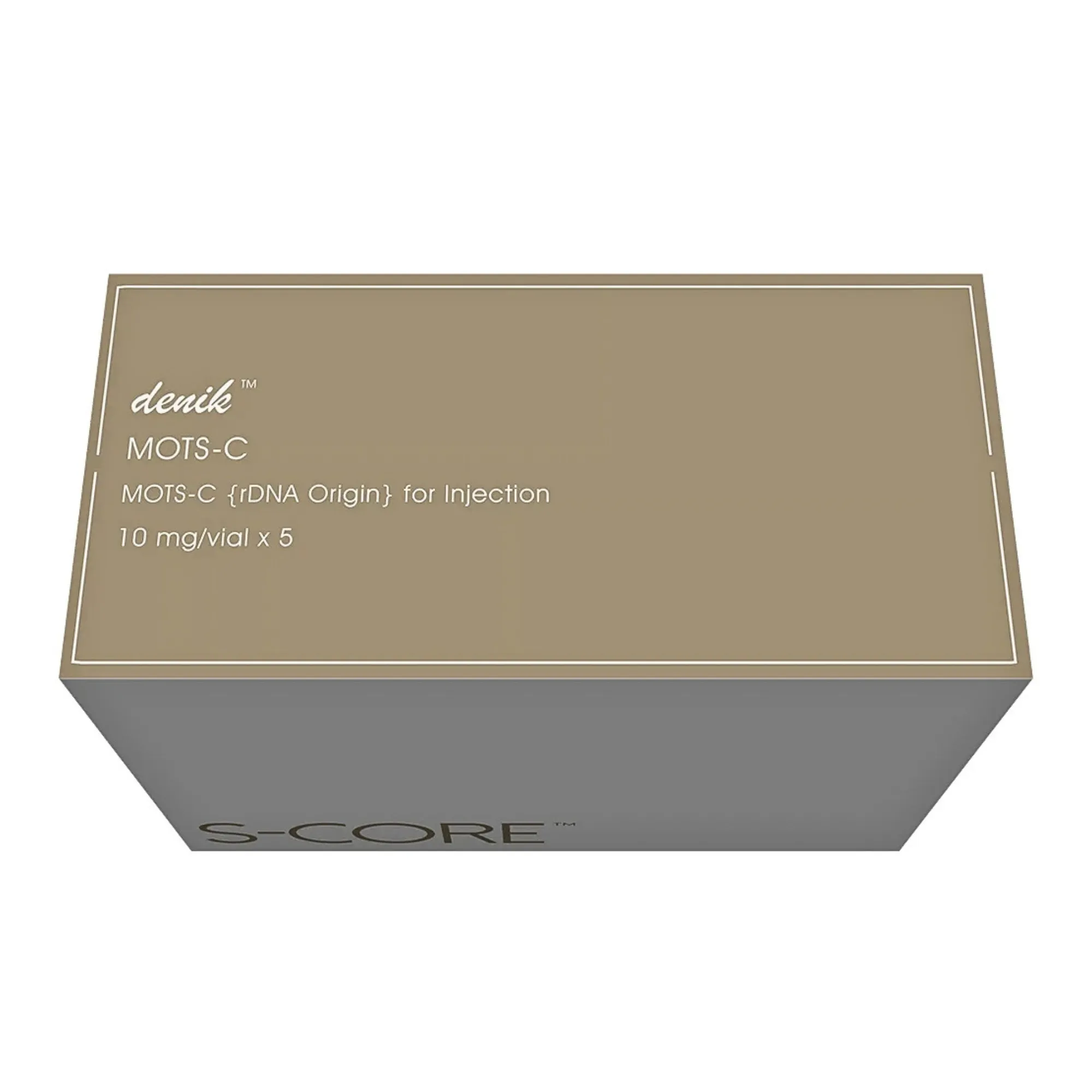






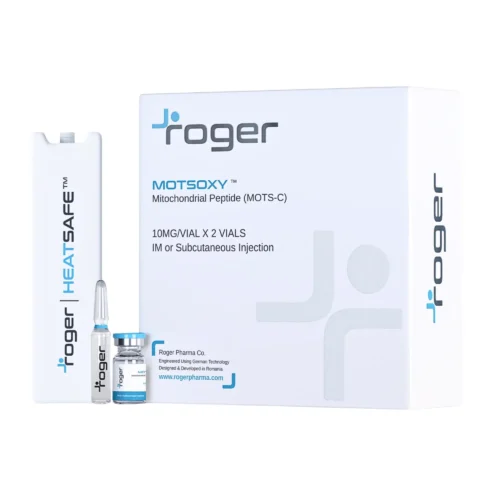
Denik Pharma MOTS-CORE (MOTS-C)
Denik Pharma MOTS-CORE (MOTS-C) is a peptide-based research product associated with scientific investigations into mitochondrial function, cellular energy regulation and metabolic signaling. MOTS-C is a naturally occurring, mitochondria-derived peptide consisting of 16 amino acids. It has attracted scientific interest because of its proposed involvement in cellular responses to metabolic stress.
MOTS-C is being investigated for its potential relationship with energy metabolism, glucose regulation, physical activity and metabolic homeostasis. However, these areas remain subjects of research, and the effects of administering synthetic MOTS-C to humans have not been established.
1. What Is MOTS-C?
MOTS-C is a small peptide encoded by mitochondrial DNA rather than conventional nuclear DNA. Mitochondria are important cellular structures responsible for producing much of the energy required by the body.
Researchers have identified MOTS-C as a mitochondrial-derived peptide, sometimes referred to as a mitokine. Its biological activity is being investigated in connection with metabolic pathways, particularly those associated with AMP-activated protein kinase (AMPK).
AMPK is an important cellular enzyme involved in regulating energy balance. It responds to changes in cellular energy availability and influences several metabolic processes. Researchers are investigating whether MOTS-C can influence these pathways under specific experimental conditions.
2. Mitochondrial Function and Cellular Energy
Mitochondria play a central role in cellular energy production. They help convert nutrients into adenosine triphosphate (ATP), which provides energy for numerous biological processes.
MOTS-C has attracted research interest because of its proposed role in mitochondrial communication and metabolic adaptation. Laboratory studies suggest that it may influence certain cellular responses to metabolic stress.
These findings have encouraged further investigation into how mitochondria-derived peptides communicate with other cellular systems. However, the extent to which these mechanisms translate into meaningful clinical benefits in humans remains uncertain.
3. MOTS-C and Metabolic Research
One of the major areas of MOTS-C research is metabolic regulation. Scientists are investigating its potential relationship with glucose metabolism, insulin signaling and energy utilization.
Some animal studies have reported changes in metabolic markers following MOTS-C administration. These findings provide a basis for further research into its biological activity.
Nevertheless, results from animal experiments cannot establish that MOTS-C improves insulin sensitivity, controls blood glucose or treats metabolic disorders in humans. These potential applications require properly designed clinical trials.
4. AMPK Signaling and Metabolic Homeostasis
AMPK is an important regulator of cellular energy homeostasis. It helps cells respond to fluctuations in available energy and coordinates several metabolic pathways.
MOTS-C is studied in relation to AMPK signaling and other cellular mechanisms that may influence energy balance. Researchers are interested in understanding how mitochondrial signals interact with metabolic pathways in different tissues.
Although early experimental findings are scientifically interesting, the precise mechanisms and clinical significance of MOTS-C remain under investigation.
5. MOTS-C and Exercise Physiology
Exercise places increased energy demands on muscles and activates several cellular adaptation mechanisms. Researchers have investigated the relationship between naturally occurring MOTS-C levels, exercise and metabolic stress.
Some studies suggest that MOTS-C may be involved in the body’s response to physical activity. However, observing changes in naturally occurring MOTS-C is different from administering a synthetic peptide.
There is currently insufficient clinical evidence to establish that MOTS-C improves endurance, increases muscle strength, accelerates recovery or enhances athletic performance in humans.
6. Body Composition and Fat Metabolism Research
MOTS-C has also attracted interest in research involving body composition and energy metabolism. Experimental studies have investigated its potential influence on metabolic processes associated with fat accumulation and energy expenditure.
Certain animal studies have reported promising metabolic observations. However, there is no established clinical evidence that MOTS-C produces meaningful fat loss, preserves lean muscle mass or improves body composition in humans.
It should not be presented as a proven weight-management treatment or a substitute for established nutritional and medical interventions.
7. Scientific Research and Development
Research into MOTS-C includes laboratory experiments, animal studies and investigations of naturally occurring MOTS-C in humans. A registered clinical study is also investigating administered MOTS-C, but its results are not yet available.
It is important to distinguish research involving the body’s naturally produced peptide from clinical studies involving synthetic MOTS-C. Observational findings do not establish the safety or effectiveness of a research product.
Further research is required to determine its pharmacological properties, potential applications and long-term safety.
8. Product Quality and Handling Considerations
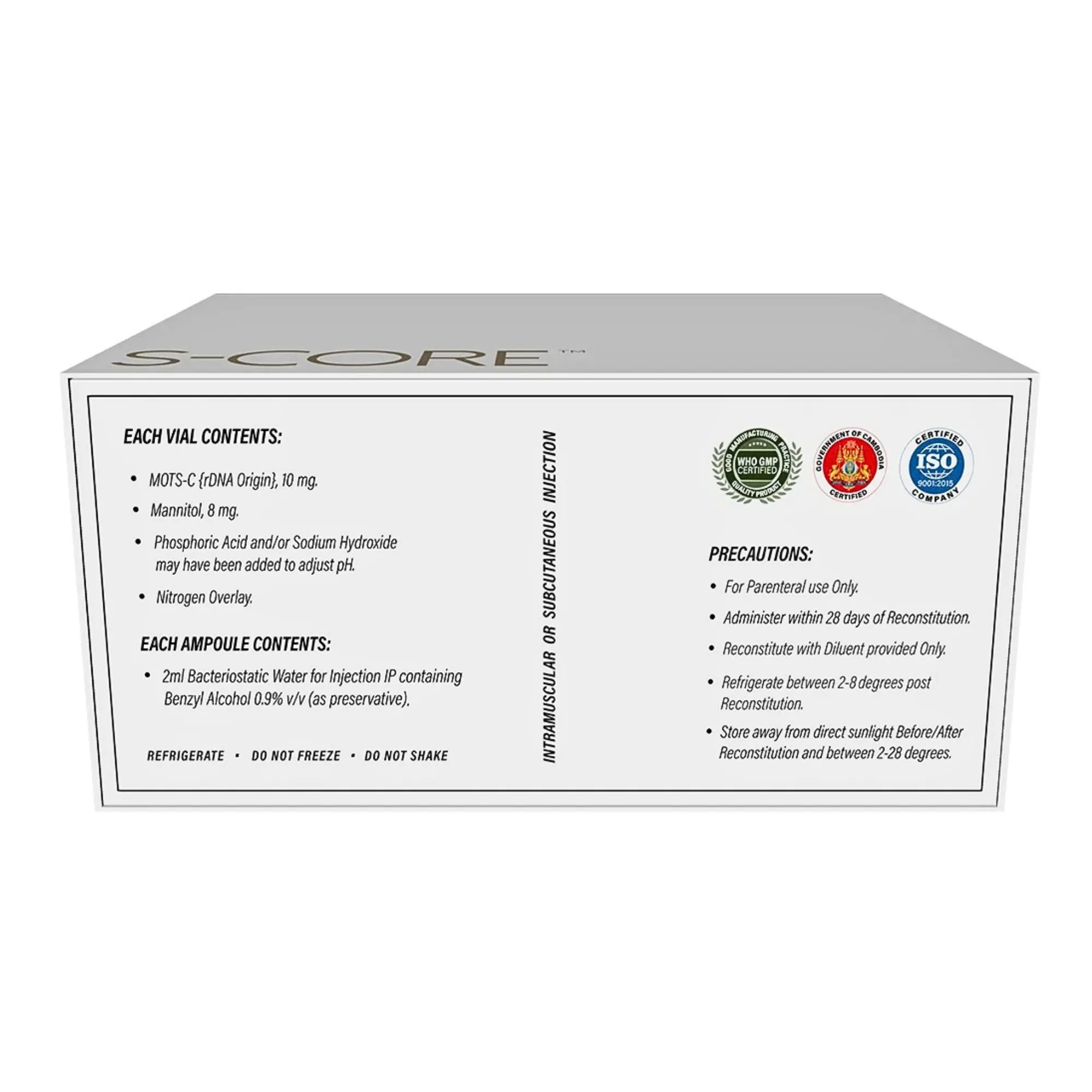
Denik Pharma MOTS-CORE (MOTS-C) is identified by its product name as a peptide research product. Product-specific purity, manufacturing standards, stability, storage requirements and independent laboratory verification should be confirmed using authentic manufacturer documentation.
The product name alone does not establish its composition, sterility, potency or suitability for any particular research application. Buyers and research professionals should verify the available batch-specific documentation and applicable regulatory requirements.
9. Safety and Side-Effect Information
MOTS-C does not have an established human safety profile. There is insufficient clinical evidence to claim that it is free from side effects or safe for routine use.
Potential concerns with unapproved injectable peptides include immune reactions, contamination, impurities, incorrect peptide identification and unpredictable biological responses. The frequency and severity of MOTS-C-specific adverse effects have not been established.
Individuals should not assume that a lack of documented adverse effects demonstrates safety. MOTS-C should not be used for self-treatment, bodybuilding, weight loss or performance enhancement outside appropriately authorized research.
10. Conclusion
Denik Pharma MOTS-CORE (MOTS-C) is associated with an emerging area of mitochondrial peptide research. Its scientific relevance includes investigations into cellular energy regulation, AMPK signaling, metabolic homeostasis and exercise physiology.
Although preclinical findings have generated interest, its potential benefits in humans remain unproven. Further clinical research is necessary to establish its safety, efficacy and appropriate medical applications.
This description is provided for educational and research-information purposes only. MOTS-C is an investigational peptide and is not an established treatment for any medical condition. No claim is made that it is free from side effects, safe for human use or effective for fat loss, muscle growth, insulin resistance or longevity. Do not use it for self-medication or without appropriate medical and regulatory oversight. Product availability and legal status may vary by jurisdiction.


Reviews
Clear filtersThere are no reviews yet.